Most creators misunderstand the TikTok algorithm in the same way: they think it is a lottery. It is actually an engineering system with concrete rules. Understand the system, and you can shape the output.
This post combines three sources: TikTok's own documentation, interviews with 30+ creators, and data Krevio collected from 1,000+ Thai channels. It is the 2026 picture as it actually plays out in Thailand.
What "the algorithm" actually does
The TikTok algorithm is a ranking system answering one question: "who should this video go to next?" Every uploaded video gets evaluated and routed to viewers most likely to engage.
It is not magic, but it is also not a single number. It weights several signals at once. The weighting changes each quarter — 2026 weights are noticeably different from 2024.
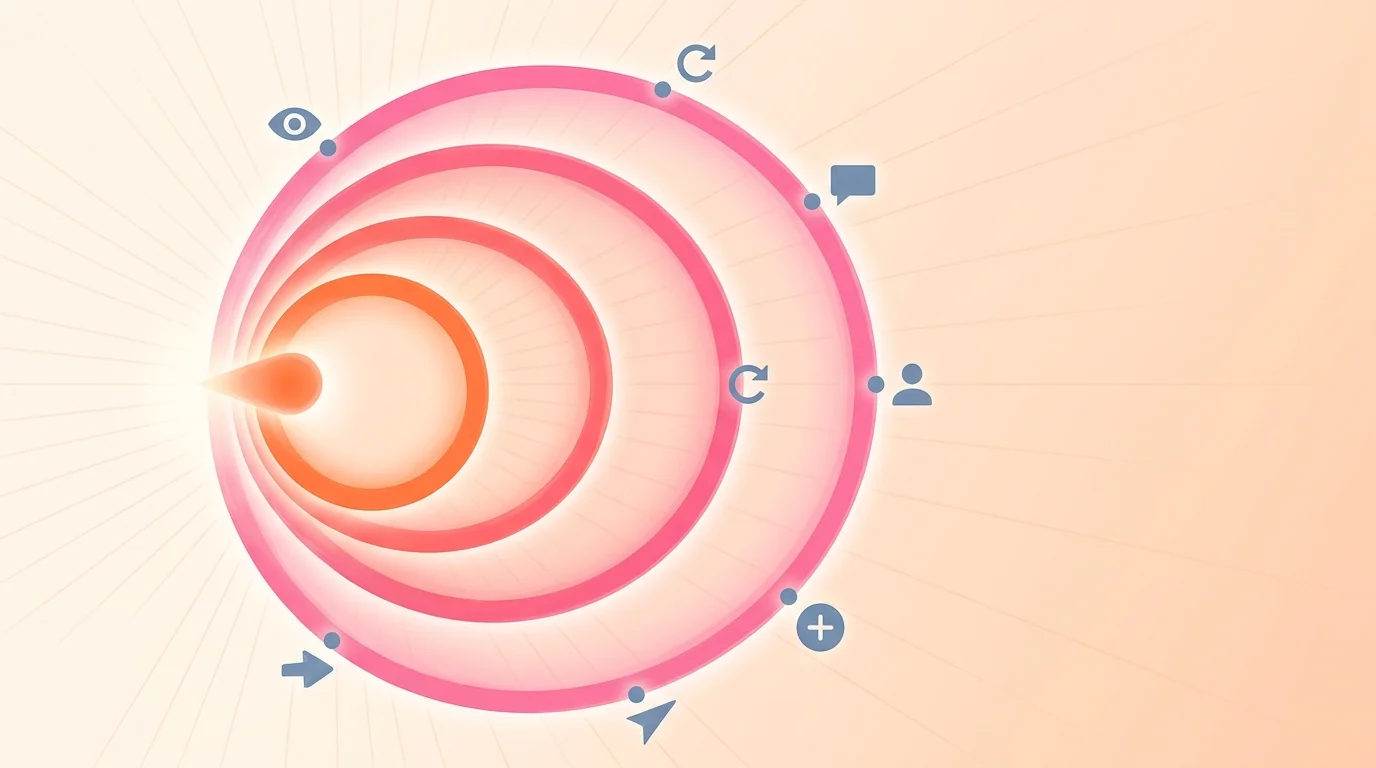
4 stages
Every video passes through these four stages. Clearing each = bigger audience.
Stage 1 — Cold Start (0-1,000 views)
Initial pool of 200-1,000 viewers, drawn from:
- Your followers — ~30%
- Users with similar viewing history — ~50%
- Random users (signal-testing) — ~20%
Measured here: do they finish? what % pause? any comments or shares?
Threshold to pass: completion >50% + engagement rate >5% → Stage 2.
Fail: distribution stops. Video goes nowhere.
Stage 2 — Velocity Check (1,000-10,000 views)
A larger pool. The metric here is speed of engagement.
- 1,000 → 5,000 in the first hour = high velocity.
- 1,000 → 5,000 in 12 hours = low velocity.
Velocity is the most important signal in Stage 2. Fast = algorithm reads it as trending material and amplifies immediately.
Threshold: velocity past the 80th percentile within the niche → Stage 3.
Stage 3 — Niche Match (10,000-100,000 views)
The algorithm now knows the video works. The next question is "with whom."
It profiles the demographic + interest pattern of completers in stages 1-2, then routes to users matching that profile.
This is why a sharp niche matters. If your stage-1-2 completers are mixed (because the niche is unclear), the algorithm cannot find the pattern, and the video stalls in Stage 3.
Threshold: retention within a specific demographic >70% → Stage 4.
Stage 4 — Long-tail (100,000+ views)
Major FYP placement. The algorithm starts testing adjacent audiences — does this video still work outside the core niche?
Stage 4 winners go viral (1M+). Most videos cap at Stage 2-3 — that is not failure, just typical.
6 signals the FYP actually uses in 2026
From the data + interviews — these six are the heaviest-weighted in 2026.
1. Watch time (most important) · weight ~35%
Completion rate (% who finish) > average watch time (avg seconds). TikTok looks at both, but completion dominates.
Trick: a 25-second video at 70% completion outperforms a 60-second video at 40% — in the algorithm's eyes.
2. Replays · weight ~20%
Severely underrated. If viewers come back to rewatch, the algorithm reads it as premium.
How to encourage replays: small details people need a second pass to catch — fast-blink text, split-second scene changes, meta jokes.
3. Shares · weight ~15%
Shares are the strongest endorsement. The algorithm boosts videos with high share rate.
Important: DM shares > shares to other apps. DM = personal recommendation, weighted higher.
4. Comments · weight ~12%
Comment count matters, but quality is weighted too. Long comments > single emojis. Reply threads > standalone comments.
Trick: ask a question in the hook. Solicit opinions. Make threads happen.
5. Profile visits · weight ~10%
After watching, did the viewer click into your profile? Yes = strong interest. The algorithm boosts. This is why a clickable bio matters.
6. Follow-after-watch · weight ~8%
Follow rate per view = a premium signal. A creator gaining 1-2% follower lift per video compounds fast.
Overrated signals — creators think they matter, they do not
Likes · weight ~5%
Yes, likes have dropped a lot. Old creators still chase "morning likes." In 2026 likes are a vanity metric — the algorithm largely ignores them.
Hashtags · weight ~3%
Hashtags mattered in 2020-2022. In 2026 the algorithm uses visual + audio + caption analysis instead. Hashtags are a soft signal, not a category tag.
Use 3-5 relevant hashtags. Do not stuff.
Posting time · weight ~5%
Big in 2021. In 2026 the algorithm distributes "when users are active," not "when you posted."
Meaning: a video posted at 02:00 with strong content still appears in FYP feeds at 19:00 the next day. Time-of-post adds a small boost — less than people assume.
How algorithm differs in Thailand vs the US
TikTok uses one global algorithm core, but training data is regional.
Differences:
1. Content style preference. Thailand favors humor + storytelling. US favors direct + tactical.
2. Replay rate. Thai replay rate is ~1.5× US — Thai content is rarer in the global feed.
3. Comment culture. Thai comment threads run longer. Comment signal weight benefits.
4. Sales signal. TikTok pushes Shop Thailand hard, so sales conversion has higher weight than in other regions. Selling well = boosted.
3 myths to drop
Myth 1 — Shadow bans are real
No. What's called "shadow ban" is actually videos the algorithm assessed and did not promote past Stage 1. There's an algorithmic reason — not a punishment.
"Fixing your shadow ban" is not a thing. Improving content quality is.
Myth 2 — Bio links kill reach
False. TikTok Shop Thailand encourages bio links. The algorithm does not penalize for them. Reach drops because of low retention, not the link.
Myth 3 — One video per day, more is worse
False. There is no daily quota. Three quality videos a day is fine — each is evaluated independently.
One caveat: two low-quality videos in a row drop the channel's trust score, which leaks into subsequent videos. Not a frequency penalty — a quality cumulative effect.
FAQ
What if videos keep stalling at Stage 1?
1. Check the hook — does it hit 50% completion in 3s?
2. Check length — 25-35s is the 2026 sweet spot.
3. Swap the hook — post a similar-content video with a different hook, see if it clears.
How often does the algorithm change?
Minor adjustments every 2-4 weeks; major shifts each quarter. Weighting changes; the structure (4 stages + 6 signals) is stable.
How long until the algorithm "understands" a new niche?
First 14-21 videos in a new niche, the algorithm is confused. After that, performance normalizes. This is exactly why pivots need a 14-day playbook.
Does Krevio use this algorithm logic?
Yes. Krevio Content Plan recommends a posting schedule + topic mix optimized for the 4 stages + 6 signals. Channel Analysis identifies which stage your channel stalls at.
Summary
TikTok algorithm 2026: 4 stages (cold start → velocity → niche match → long-tail) + 6 main signals (Watch time 35%, Replays 20%, Shares 15%, Comments 12%, Profile visits 10%, Follow-after-watch 8%). Stop treating Likes/Hashtags/Posting time as primary signals. Drop the shadow-ban myth. Focus on first-3-second retention — it is the gate to the whole system.
Want to audit which stage your channel stalls at? Krevio Channel Analysis surfaces it in 30 seconds.